


This article was originally published on the BruteProtect blog. BruteProtect was a plugin designed to stop malicious IPs from accessing WordPress websites. The technology behind BruteProtect is now part of Jetpack’s security features, protecting millions of website from brute force attacks every day.
Thanks for all the feedback and shares on Part 1, see that post for more info on which modules in Jetpack are activated by default and which “Other” plugins we used to test against.
There have been a number of requests for us to show what WordPress core (with no plugins) and Jetpack activated but all modules deactivated looks like, so here we go.
Note that all of the numbers have changed a bit because we re-ran all tests from scratch with an updated version of WebPageTest.
| Other Plugins | Jetpack (with default modules) | Jetpack (with no modules) | WordPress Core, no plugins | |
|---|---|---|---|---|
| First load, TTFB | 1103ms | 569ms | 470ms | 408ms |
| First load, Fully loaded | 2742ms | 1970ms | 1756ms | 1620ms |
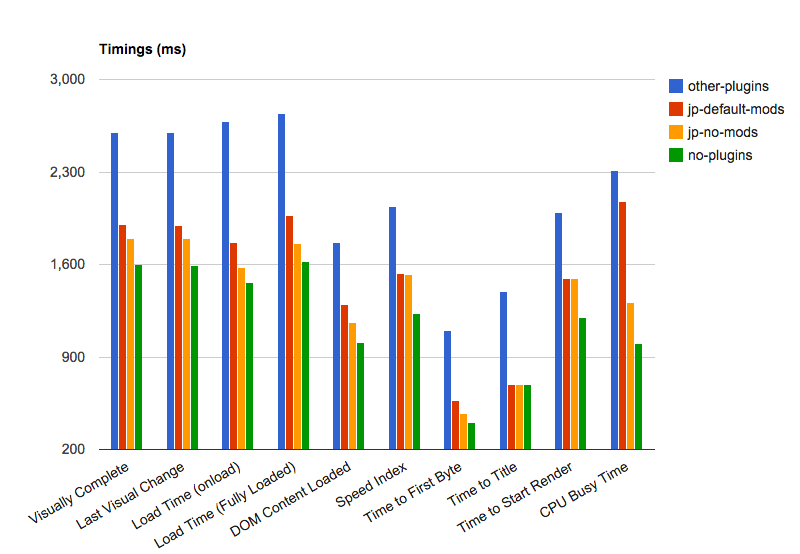
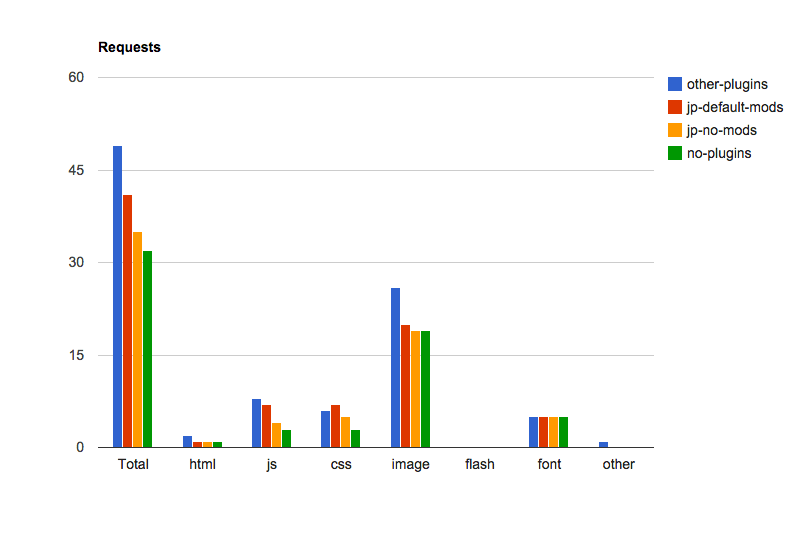
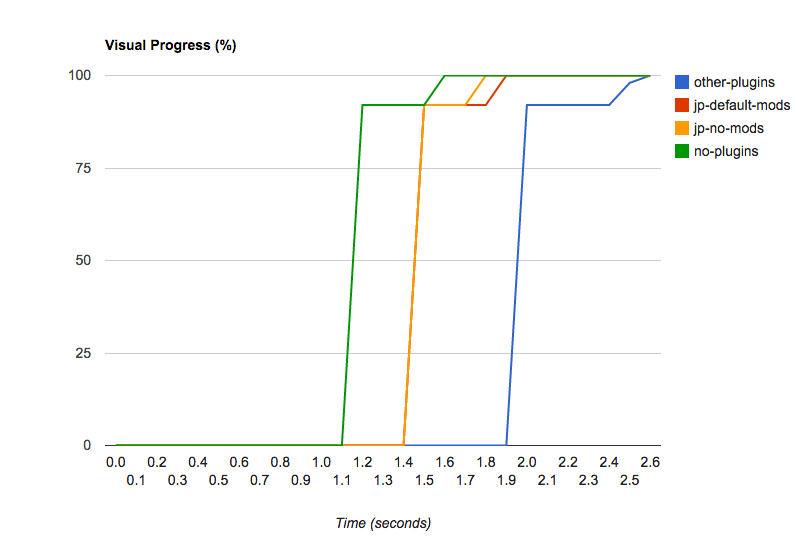
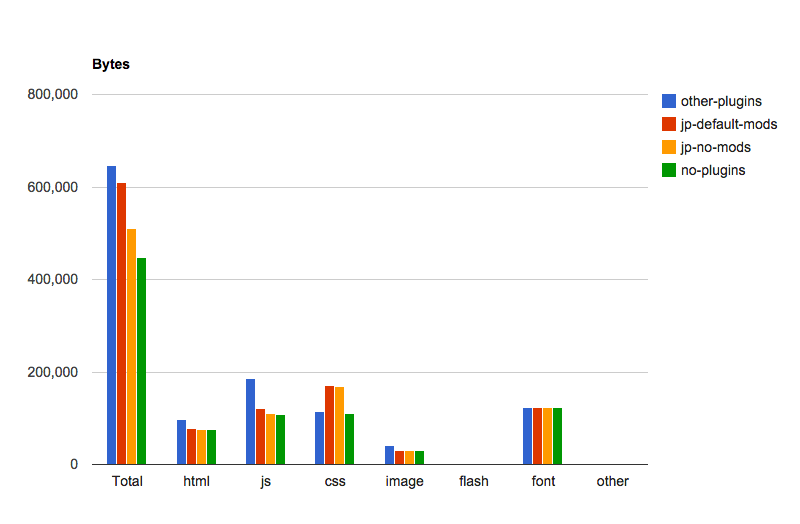
About our testing methodology:
Tests were run from a private instance of WebPageTest, run from an EC2 instance within 1ms of our test subject server. Each test was run 27 times, and we used the median score for each factor. The test server had no other traffic on it while these tests were being performed.
Still have questions about the Jetpack plugin? Contact support or search documentation for quick answers.