Jetpack 3.1: Portfolio Custom Post Types, a New Logo, and Much More

The latest Jetpack update adds exciting new features like additional JSON API endpoints and Custom Content Types — which includes the Portfolio Custom Post Type. And we’ve got a spiffy a new logo!

Custom Content Types

Custom Post Types (or CPTs) allow you to have content that doesn’t necessary fit into a post but isn’t right for a static page. Now, you can enable Custom Post Types via Jetpack. More and more CPTs are supported by themes on WordPress.com, making the ability to access this custom content critical if a user migrates to a self-hosted site.

Introducing the Portfolio Custom Post Type
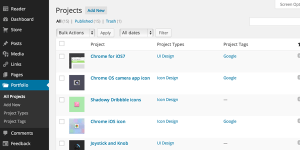
custom-content-types

The Portfolio Custom Post Type gives you an easy way to manage projects you want to showcase on your site. It’s already supported by a number of themes, and more theme developers are planning on adding it.

If your theme doesn’t support it yet, enable the Portfolio Custom Post Type by activating the Custom Content Types module in your Jetpack settings. Then, enable the feature by going to Settings > Writing in your WordPress admin and checking the option under “Your Custom Content Types” to enable the Portfolio Custom Post Type.

You can then choose to display the portfolio using the portfolio shortcode ( [portfolio] ) or with a link to the portfolio in the menu.

New Jetpack Logo

Jetpack 3.1 also unveils a new Jetpack logo. Without further ado, here it is!

New Jetpack Logo

Why do we need a new logo? Glad you asked! Jetpack is ever-evolving and is a major part of Automattic and WordPress. It’s grown a lot since its introduction in 2011, and its branding should grow too. Something better, faster, stronger.

If you would like to use the new logo, you can find the official PDF on the Automattic press page.

Features for Theme Developers

If you are theme developer — or just like to tinker with your theme — you’ll enjoy Jetpack 3.1’s additions

First off, we’ve added responsive video support! One of the things that is often overlooked when developing a responsive theme is making videos responsive. To add support to your theme, just add the following line to your theme’s functions.php file.

<?php add_theme_support( 'jetpack-responsive-videos' ); ?>

This ensures that any videos are responsive, no additional markup or special coding required. It just works! Every video on your site will display just as nicely on mobile devices as they do on your largest display.

We’ve also updated to the most recent version of Genericons (3.1). For specific changes, please see the Genericons releaselog.

Features for Plugin Developers

For sites that opt in, we’re also adding additional JSON API endpoints that allow you to manage themes and plugins as well as Jetpack feature activation. If you’ve not yet explored the WordPress.com JSON API, you can do so online at the WordPress.com developer console.

More Updates to the Jetpack Admin Interface

Jetpack 3.0 dramatically overhauled the Jetpack admin interface. Thanks to your feedback, 3.1 makes new design even more user friendly and accessible! Now, you can activate, configure, and deactivate Jetpack features right in the feature description box. Manage the feature with a single click and configure its settings without backing out of the description.

We also improved the RTL support for many Jetpack features. With WordPress and Jetpack used globally, this makes it easier for people who use languages that read from right to left to better use these features.

And so much more!

As always, there are many minor enhancements and bug fixes with Jetpack 3.1. For full details, please see the change log.

We value your feedback, so please comment and let us know what you love, and what you’d like to see in future updates. If you find any possible bugs or issues, please file a new issue on the Jetpack GitHub page, create a new forum post, or simply contact our support team.


Posted in Releases | 21 Comments

Indispensable Jetpack features for theme developers

Jetpack offers a number of great features for theme developers that help you cut down both development time as well as load times. Most of these features work right out of the box, but you can also get under the hood to apply tweaks and customisations that really take your theme to the next level.

This article introduces you to:

  1. Speeding up your theme with Photon
  2. Showcasing posts with Featured Content
  3. Automatically loading posts with Infinite Scroll
  4. Instantly applying a Mobile Theme
  5. Customising CSS
  6. Providing Sharing functionality
  7. Integrating Social Links
  8. Showing similar content with Related Posts
  9. Additional resources


1. Speeding up your theme with Photon

Jetpack for developersPhoton is a free image CDN offered by Jetpack. As soon as Photon is enabled, it automatically serves the images found in posts and pages from WordPress.com’s speedy servers around the globe.

But did you know that you can use it to save bandwidth and speed up load times for images within your theme, too? You can link to a Photon-ized version of an image by calling the jetpack_photon_url() function. Its quite straightforward and we’ve put together some step-by-step instructions to make it even easier.


2. Showcasing posts with Featured Content

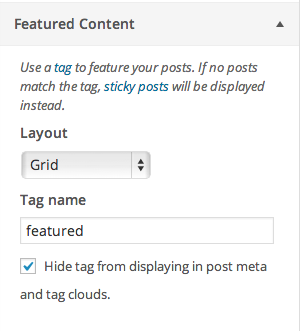
Featured Content SettingsFeatured Content is one of Jetpack’s lesser known features. But it’s a really powerful tool for theme development because you can use it to create a completely custom area in your theme for users to showcase posts. The appearance and placement is completely up to you, the theme author.

Your users can then specify which posts to show in that area simply by selecting a tag of their choice. There’s even an option to hide the tag from post meta and tag clouds.

Whether you are building an image slider on your homepage, or want to allow users to highlight specific posts, Featured Content makes it easier than rolling your own custom functionality. You can see a few examples of the feature in action here.


3. Automatically loading posts with Infinite Scroll

With Infinite Scroll active, users no longer have to click a link to get to the next set of posts on archive pages. Instead, your theme loads the next set of posts automatically into view when the reader approaches the bottom of the page. You’ve probably seen similar functionality on other sites, and thanks to Jetpack, it’s a snap to add it to your theme.


4. Instantly applying a Mobile Theme

Jetpack Mobile Front PageMobile internet usage is growing exponentially and any theme worth its salt should work on mobile devices. That’s why you’ll be happy to know that Jetpack ships with a full Mobile Theme ready-to-go out of the box.

Just use the .mobile-theme CSS class to style the mobile theme or take things a step further and use jetpack_is_mobile to target mobile visitors.

That way you can build the best user experience for your theme, no matter what device visitors are using.

Check out this article on customizing Jetpack’s mobile theme to learn more.


5. Customising CSS

If you’ve published a theme before you most likely know that users often want to customize its appearance. Savvy users might create a child theme, but more often than not, users will simply edit your theme’s files directly.

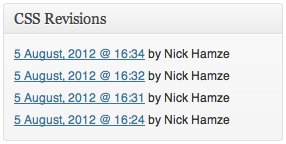
revision_listThat can get messy when you release a theme update that overwrites users’ modifications. But thanks to Jetpack, a much more user-friendly alternative is available through the Custom CSS feature which also includes a revision history.

After activating the feature, a ‘Custom CSS link’ is added to the Appearance menu in the Dashboard. From there, users can add their own Custom CSS, without touching the theme’s files. They can even use their favorite CSS pre-processer, as support for both SASS and LESS is built right in.


6. Providing Sharing functionality

The Sharing feature allows you to add social media sharing buttons to your theme. There are multiple display options built in and you can opt to use your own custom styles as well.

In this way you can integrate social sharing buttons in your theme, and keep complete control over their appearance. You can even alter the functionality with some jQuery magic. Our friends over at ThemeShaper have a great article with more information about this.


7. Integrating Social Links

Jetpack also makes it easy to include Social Links within your theme. After a user connects their social media accounts through Publicize, you can automatically use links to their accounts in your theme. You can add support with add_theme_support() and then use the Theme Modifications API to pull the data into your theme.


8. Showing similar content with Related Posts

Related posts in visually striking modeRelated Posts is one of Jetpack’s newer features. When activated, this adds a section to single posts that includes automatically generated links to similar content.

By default the section appears at the bottom of your content, but you can also move it to the top with a filter. In addition users can add a shortcode wherever they want the section to appear.

This means that you can include styling for the Related Posts section in your theme and then users are able to drop in a custom Related Posts section that matches the rest of their site wherever they want.


9. Additional resources

Finally, we’d love to see what you’ve done yourself and what you think of Jetpack. If you have questions, comments or your own tips drop us a comment below! In addition to that, we’re always open to suggestions, so feel free to get in touch. Thanks for flying with Jetpack!

Posted in Features, Tips & Tricks | Tagged , , , | 6 Comments
  • Enter your email address to receive news and updates from Jetpack

  • Join 98.9K other subscribers
  • Browse by Topic