

While password salting has made traditional rainbow table attacks nearly obsolete on modern platforms like WordPress, understanding how they worked reveals critical lessons for today’s security landscape. These attacks were masters of efficiency, cracking password databases with terrifying speed.
By dissecting their methods, we can better appreciate why modern defenses like strong hashing algorithms and multi-factor authentication are non-negotiable. This guide explores the mechanics of rainbow table attacks, examines their legacy, and shows you what modern threats have taken their place.
What is a rainbow table?
A rainbow table is a precomputed table used for reversing cryptographic hash functions, primarily for cracking password hashes. Hash functions are algorithms that turn a set of data (like a password) into a fixed-size string of characters, which is typically a sequence of numbers and letters. However, the hash function is a one-way process — it’s easy to turn a password into a hash, but very hard to turn a hash back into a password.
This is where rainbow tables come in. They’re large, precomputed tables of hash values for every possible combination of characters. An attacker can use a rainbow table to reverse the hashing process, matching the hash to a string in the table and uncovering the original password. This method can be highly effective against systems that use unsalted hashes, where the hash function doesn’t add random data to the passwords before hashing them.
Understanding the nature of rainbow tables is essential for implementing effective security measures. They represent a significant vulnerability, especially for systems that rely on simple hash functions without additional security measures like salting.
How do rainbow tables work?
The functionality of rainbow tables hinges on a sophisticated blend of cryptography and data management. To understand how they operate, it’s important to grasp two key concepts: hash functions and precomputation.
Hash functions take an input (like a password) and produce a fixed-size string of characters, which appears random. These functions are designed to be one-way streets: generating a hash from an input is straightforward, but figuring out the original input from the hash is supposed to be challenging.
Rainbow tables circumvent this by using a clever method called precomputation. Before an attack, hackers generate a rainbow table, which is a large database containing a vast number of potential passwords and their corresponding hash values.
This process involves selecting a range of potential passwords, applying the hash function to each, and storing the results. By doing this work in advance, hackers can quickly compare a stolen hash to their table, find a matching entry, and reveal the original password.
What sets rainbow tables apart from simple lookup tables is their use of a reduction function. This function converts a hash into another password, which can then be hashed again, forming a chain of passwords and hashes.
Rainbow tables store only the first and last elements of these chains. When hackers encounter a hashed password, they use the reduction function to see if it appears anywhere in their chains, gradually narrowing down possibilities until they find a match.
This method significantly reduces the storage space needed for the table, making rainbow table attacks a feasible, albeit resource-intensive, method of cracking passwords. However, they are less effective against systems with strong security measures, such as complex hash functions and the use of salt (random data added to a password before hashing).
Common targets of rainbow table attacks
Rainbow table attacks are not indiscriminate — they target specific types of systems that are the most vulnerable based on certain characteristics. Understanding these common targets can help you prioritize security efforts.
Systems with weak passwords
Systems where users have default, common or weak passwords are prime targets. Simple passwords can be easily cracked using rainbow tables, as they’re likely to be included in the precomputed hash values.
Systems with unsalted hashes
Hashing passwords is a standard security practice. However, when these hashes are unsalted — don’t have random data added to them before hashing — they become more vulnerable. Rainbow tables can effectively reverse-engineer these unsalted hashes.
As a reminder, this is why WordPress websites are no longer vulnerable to rainbow table attacks. The addition of salted hashes in WordPress core in 2008 effectively eliminated the usefulness of this specific cyber threat.
Systems with no two-factor authentication (2FA)
2FA adds an extra layer of security beyond just a password. Systems lacking this feature are more susceptible to attacks, as the only barrier is the password, which could potentially be cracked through rainbow tables.
How to prevent and mitigate rainbow table attacks
Preventing and mitigating rainbow table attacks requires a multi-faceted approach, combining robust password management, system configurations, and continuous monitoring. Each element plays a critical role in forming an impenetrable defense against these sophisticated attacks.
1. Strong password policies
Implementing strong password policies is the first line of defense. This involves setting guidelines that ensure all passwords used in the system are complex and difficult to crack.
A strong password typically includes a mix of uppercase and lowercase letters, numbers, and special characters. It should be of substantial length, ideally more than 12 characters.
Additionally, encouraging or enforcing regular password changes can further enhance security. However, it’s essential to balance security with ease to ensure that users don’t resort to insecure practices like writing down passwords.
2. Password salting
Password salting works by adding a unique, random string of characters (a “salt”) to each password before it’s hashed. This ensures that even if two users have the same password, their stored hashes will be completely different, rendering a rainbow table useless.
WordPress handles this automatically using the security keys in your wp-config.php file. These keys act as salts, strengthening your site’s password security.
define( 'AUTH_KEY', 'put your unique phrase here' );
define( 'SECURE_AUTH_KEY', 'put your unique phrase here' );
define( 'LOGGED_IN_KEY', 'put your unique phrase here' );
define( 'NONCE_KEY', 'put your unique phrase here' );
define( 'AUTH_SALT', 'put your unique phrase here' );
define( 'SECURE_AUTH_SALT', 'put your unique phrase here' );
define( 'LOGGED_IN_SALT', 'put your unique phrase here' );
define( 'NONCE_SALT', 'put your unique phrase here' );
Pro Tip: While WordPress creates these for you, you can invalidate all existing logins and further secure your site by generating new keys using the official WordPress.org salt generator and updating your wp-config.php file.
3. Rate limiting and account lockout
Implementing rate limiting and account lockout mechanisms is an effective way to thwart automated attempts to guess passwords. Rate limiting restricts the number of login attempts that can be made in a given period, while account lockout policies lock an account after a certain number of failed login attempts. These measures not only prevent brute force and rainbow table attacks but also alert administrators to potential security threats.
4. Two-factor authentication (2FA)
Two-factor authentication significantly improves account security. By requiring a second form of verification, such as a text message or an authentication app, 2FA ensures that knowing the password alone is not enough to gain access. This is especially effective against rainbow table attacks, as the second factor provides an additional hurdle for attackers.
5. Install an all-in-one security solution
While rainbow table attacks are no longer a threat for WordPress sites, admins should still install a comprehensive WordPress security solution like Jetpack Security to protect against other hazards.
Jetpack Security offers comprehensive features, including real-time backups, a web application firewall, malware scanning, and spam protection. Its integrated approach guards WordPress sites against a range of threats.
6. Activity monitoring and logging
Continuous monitoring of system activities and maintaining detailed logs are vital for early detection of suspicious activities that could indicate a security breach. Monitoring tools can alert administrators to unusual patterns, such as logins at odd hours or from unexpected locations, which could signify an attempt to use stolen credentials. Logs provide a record of activities that can be invaluable for investigating and understanding the nature of any security incidents that occur.
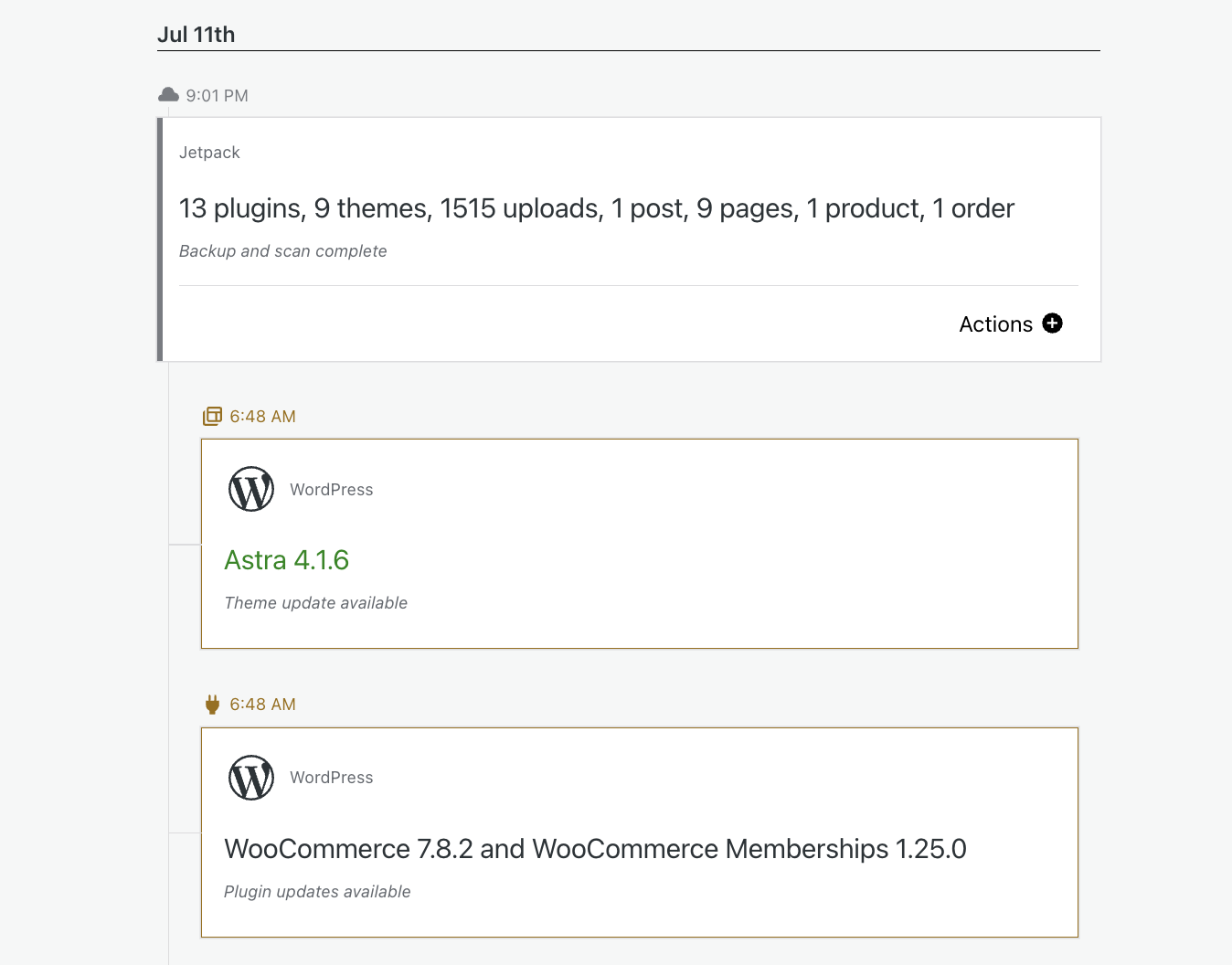
By integrating these strategies into their security plan, WordPress site owners can significantly reduce their vulnerability to rainbow table attacks and other types of cyber threats, protecting the data of their organization and users.
Rainbow tables vs Brute-force attacks: What’s the difference?
| Feature | Rainbow Table Attack | Brute-Force Attack |
| Method | Uses a precomputed table to match stolen hashes to plaintext passwords. | Tries every possible character combination against a live login form. |
| Speed | Extremely fast once the hash is obtained (offline). | Extremely slow and computationally expensive (online). |
| Primary Defense | Password Salting adds random data to the hash, making precomputed tables useless . | Rate Limiting and Account Lockouts block repeated failed login attempts. |
| Visibility | Can be invisible until the compromised account is used. | Generates a high volume of failed login attempts, making it noisy and detectable. |
Key motivations behind rainbow table attacks
Learning the motivations behind rainbow table attacks helps explain why certain systems are targeted and how to better protect them. There are several key motivations:
Unauthorized access
The primary aim of most rainbow table attacks is to gain unauthorized access to systems and networks. By cracking passwords, attackers can infiltrate systems, often with the intent of accessing confidential information or executing malicious activities without detection.
Data and identity theft
Access to a system can lead to data and identity theft. Hackers may steal personal information, financial details, or intellectual property. They can then use this data for various illegal activities, including fraud and selling the information on the dark web.
Account and system takeover
Rainbow table attacks can also be a step towards taking over accounts or entire systems. Once inside, attackers can change passwords and lock out legitimate users, essentially taking control of the system for their purposes.
Credential recycling
Attackers often use the passwords obtained from one system to try and access other systems. This technique, known as credential recycling, exploits the common habit of using the same password across multiple platforms.
We guard your site. You run your business.
Jetpack Security provides easy‑to‑use, comprehensive WordPress site security, including real‑time backups, a web application firewall, malware scanning, and spam protection.
Secure your siteRisks and consequences of rainbow table attacks
The risks and consequences of rainbow table attacks are extensive, impacting both individuals and organizations.
Data breaches and theft
The most direct consequence of a successful rainbow table attack is unauthorized access to sensitive data. This can lead to significant data breaches, where personal, financial, or proprietary information is stolen.
Service disruption and financial loss
Beyond data theft, these attacks can disrupt services, leading to website downtime. This disruption often results in financial loss, both in terms of immediate revenue and long-term customer trust.
Reputational damage
A security breach, particularly one that leads to the loss of customer data, can severely damage an organization’s reputation. Restoring public trust can be a long and challenging process.
Malware and ransomware distribution
Compromised systems can be used as a platform to distribute malware or ransomware, further escalating the attack’s impact. This can snowball into additional security incidents within the affected organization or even among its contacts.
Legal consequences and lawsuits
Companies that suffer data breaches may face legal consequences, especially if they didn’t adequately protect customer data. Lawsuits and fines can be both financially burdensome and damaging to a company’s public image.
These risks highlight the need for comprehensive security strategies that can effectively counteract the threat of rainbow table attacks and protect valuable digital assets.
Frequently asked questions
In exploring the complexities surrounding rainbow table attacks, a clear understanding of related concepts is crucial. Let’s delve into some frequently asked questions that shed light on these topics.
Are rainbow tables still relevant?
Rainbow tables are far less relevant today than they once were, but they have not disappeared entirely. Their effectiveness depends largely on how passwords are stored. Modern systems that use salted hashes and computationally expensive hashing algorithms significantly reduce the practicality of rainbow table attacks, making them an unlikely threat in well-secured environments.
However, rainbow tables can still pose a risk to legacy systems or poorly implemented password storage practices that rely on outdated, unsalted hash functions. In these cases, precomputed tables can quickly expose weak or common passwords. While no longer a primary attack method, rainbow tables remain a reminder of why proper hashing, salting, and modern security standards are essential.
What is the difference between rainbow tables and brute force attacks?
Rainbow tables and brute force attacks are distinct in their approach to cracking passwords. Brute force attacks methodically try every possible combination of characters until the correct password is found. This process can be time-consuming and computationally demanding, especially for longer passwords.
Rainbow tables, on the other hand, rely on precomputed tables that match hashed passwords to their plain text versions. While faster for certain types of passwords, they require substantial storage and are less effective against strong, salted passwords.
What is the difference between rainbow tables and credential stuffing?
Credential stuffing is a type of cyberattack where stolen account credentials — typically usernames, email addresses, and passwords — are used to gain unauthorized access to user accounts through large-scale automated login requests.
This differs from rainbow table attacks, which focus on deciphering hashed passwords using precomputed tables. Credential stuffing relies on the reuse of credentials across multiple platforms, whereas rainbow tables target the encryption aspect of password storage.
Can rainbow tables crack any type of password?
The effectiveness of rainbow tables diminishes significantly against well-secured passwords. Complex passwords that are long, use a variety of characters, and are salted present a formidable challenge to rainbow table attacks. These measures increase the computational effort required to such an extent that rainbow tables become impractical.
What types of hash functions are most vulnerable to rainbow table attacks?
Hash functions that produce predictable or unsalted outputs are more susceptible to rainbow table attacks. Older or simpler hash functions like MD5 or SHA-1, which generate unsalted hashes, are particularly vulnerable. More modern hash algorithms that include salting and increased computational complexity provide stronger defenses against these attacks.
How effective is salting in preventing rainbow table attacks?
Salting is a highly effective method to counteract rainbow table attacks. By adding a unique, random string of characters to each password before hashing, salting ensures that even identical passwords will produce unique hashes. These render precomputed rainbow tables useless, as they can’t possibly account for the unique salt applied to each password.
What is the difference between salting and peppering in password hashing?
Both salting and peppering add an extra layer of security to password hashing, but they do so in different ways. Salting involves appending a unique value to each password before it’s hashed, and the salt is typically stored in the database alongside the hash. Peppering, however, involves adding a secret value to the password before hashing. Unlike salt, pepper is not stored with the hash and is usually a fixed value used across all password hashes.
How do I know if my system is vulnerable to rainbow table attacks?
To assess vulnerability, check for the use of unsalted hash functions, weak or predictable passwords, and lack of additional security layers like 2FA. Regular security audits and penetration testing can also help identify potential vulnerabilities.
Because salted hashes are implemented by default, if you use WordPress, you should no longer need to worry about rainbow table attacks as a threat.
What are the signs that a rainbow table attack has occurred?
Indicators of a rainbow table attack include unauthorized access to user accounts, unexplained changes in account details, or alerts from security systems about unusual database queries. Continuous monitoring for abnormal activities is essential for early detection.
What role do firewalls and intrusion detection systems play in preventing these attacks?
While firewalls and intrusion detection systems are critical components of a comprehensive security strategy, their role in directly preventing rainbow table attacks is limited. These systems are more effective at monitoring and managing network traffic, detecting unauthorized access attempts, and providing alerts on potential security breaches.
How can small businesses with limited resources best protect themselves?
Small businesses can implement strong password policies, use salted hash functions, enable two-factor authentication, and regularly update and patch their systems. Additionally, affordable security solutions tailored for small businesses can offer substantial protection. Training employees in basic cybersecurity practices is also crucial.
Are there any plugins specifically designed to protect against password-based attacks for WordPress?
Yes, there are several plugins designed to enhance WordPress security against password-based attacks. For example, Jetpack Security offers comprehensive protection through features like brute force attack prevention, two-factor authentication, and regular security scanning.
While rainbow table attacks are no longer a concern for WordPress sites, other password-based attacks may still be. Jetpack Security is specifically tailored to provide a robust defense mechanism against these kinds of attacks. It achieves this through several key features:
1. Brute force attack protection. The plugin effectively guards against brute force attacks, which can be precursors or alternatives to rainbow table attacks, by limiting login attempts and monitoring suspicious activity.
2. Two-factor authentication. Use Jetpack’s secure authentication feature to enable WordPress.com sign-in and require two-factor authentication for users.
3. Regular security scanning. Jetpack Security regularly scans for vulnerabilities and immediately alerts site admins about potential threats, allowing for prompt action to mitigate risks.
Learn more about Jetpack Security.

We guard your site. You run your business.
Jetpack Security provides easy‑to‑use, comprehensive WordPress site security, including real‑time backups, a web application firewall, malware scanning, and spam protection.
Secure your site Jetpack