

Artificial intelligence (AI) technology is rapidly taking over the business world. From content creation to the assembly line, AI technology is reshaping industries and redefining the way we work.
It’s the talk at every trade show. It’s somewhere in the marketing plan of almost every company. It’s fostering innovation with greater efficiency than we could even imagine a few years ago.
And while there has been backlash against and criticism of AI, it’s clear that businesses are going to increasingly rely on artificial intelligence technologies in the future. So, how can you use AI tools to benefit your business? What new technologies in AI are appropriate for your needs? In what areas would AI applications open up new capabilities or pose potential risks?
In this article, we’ll explore five AI trends and advancements that are shaping the future for businesses. From Generative AI to cybersecurity and ethical considerations, we’ll delve into the latest developments and their potential impact on your organization.
What is AI?
Before we dive into AI trends, let’s establish what AI is. Artificial intelligence refers to computer systems that can perform tasks that would have traditionally required human intelligence. This can include problem-solving, deep learning models, speech recognition, content generation, and decision-making. AI systems can be rule-based or use machine learning algorithms to improve their performance over time.
Artificial Intelligence (AI) is a broad and interdisciplinary field, and its various subfields, often referred to as branches or sub-disciplines, cover a wide range of topics and applications.
While the classification of these branches can be somewhat subjective, here are seven commonly recognized branches of AI:
- Machine learning: This is what the majority of people probably think of when it comes to AI. Like the name implies, it uses algorithms so that the computer can learn from information it’s fed and come to conclusions without being explicitly programmed to perform a specific function. There are different kinds of “learning” that exist under this branch — supervised, unsupervised, reinforcement, and deep learning.
- Natural language processing (NLP): NLP is concerned with the interaction between computers and human language. It involves tasks such as language understanding, language generation, sentiment analysis, machine translation, and speech recognition.
- Computer vision: This branch of AI is all about enabling computers to “see” visual information (pictures, faces, objects) and accurately interpret the content.
- Robotics: Robotics involves the design, construction, and programming of physical robots that can interact with their environments. It encompasses areas such as robot perception, motion planning, and robot control.
- Expert systems: The systems in this classification are fed very specific datasets unique to a discipline (finance, law, engineering, medicine). It’s programmed with an inference engine and uses its base of knowledge to provide accurate advice and decisions within the confines of its subject expertise.
- Reinforcement learning: Reinforcement learning focuses on creating agents that learn to make decisions and take actions in an environment to maximize a cumulative reward. It’s often used in autonomous systems, gaming, and control applications.
- Artificial neural networks: Artificial neural networks, inspired by the structure of the human brain, are a key component of AI. They’re used particularly in deep neural networks (DNNs), where remarkable results have been achieved in tasks like image recognition and NLP.
These branches of AI represent different aspects and applications of artificial intelligence, and they often overlap and complement each other in solving complex real-world problems. The AI tools that the average person might use generally involve a mix of the above systems.
There are several other emerging subfields and interdisciplinary areas within AI as the field continues to evolve. For most businesses, the rapid pace of AI advances are impossible to keep track of. But don’t worry — it’s less important to stay on top of developments in every branch and subfield and more useful to focus on learning about AI trends in specific areas of AI technology that can provide significant value to your business.
Now that you have a general idea of how AI works, let’s dive into the five latest AI trends and learn how you can use them to drive innovation, improve efficiency, and increase return on investment (ROI) for your business.
Five AI trends that are transforming business

1. AI-powered website development and content management systems
Artificial intelligence is now helping automate many aspects of web development, from front-end design to back-end functionality. AI features are also being incorporated into content management systems (CMS) to help users streamline workflows, optimize site appearance and functionality, and improve security. Here are some examples of how these AI trends are applied to web development:
Code generation, autocompletion, and troubleshooting
AI-powered code editors like Amazon CodeWhisperer and GitHub Copilot provide intelligent code generation, autocompletion, and other advanced features, like automated testing and bug detection, that can help streamline website and application development. They draw from extensive libraries of code and deep learning models to analyze code patterns and offer context-aware recommendations, reducing coding errors and improving productivity.
If you’re working with WordPress, tools like CodeWP can create entire plugins from a single prompt. You can also use their platform to quickly troubleshoot fatal errors and other conflicts in your code. Their BlockStudio feature can be used to generate custom WordPress blocks, but keep in mind that this feature is still in alpha testing.
Template creation
AI can generate website templates and themes based on design preferences, content structure, and industry requirements. This accelerates the initial development phase for websites and simplifies the design process.
Layout and design optimization
AI-driven tools help optimize website layouts and design by leveraging machine learning algorithms and data analysis to enhance user experience, engagement, and conversion rates. Some of the optimization methods that rely on artificial intelligence include:
- User behavior analysis. Google Analytics 4, AI-generated heat maps that visualize user interaction patterns, and AI-powered user experience (UX) assistants are just a few tools that analyze user behavior on websites. By tracking where users click and their click-through rates, dwell time, and scroll depth, these tools can identify areas of user interest and engagement.
- Multivariate testing. Take the hassle out of multivariate testing (also referred to as A/B testing) with AI assistance. Platforms like VWO use an AI engine that helps create and compare variations of website layouts, designs, or content to determine which elements perform best. AI algorithms then analyze test results to recommend design improvements.
- Responsive design optimization. AI ensures responsive web design by adapting layouts and content for various screen sizes and devices, improving usability and accessibility.
- Conversion rate optimization (CRO). AI identifies areas where design adjustments can boost conversion rates, such as optimizing call-to-action buttons, forms, and checkout processes.

Generated with DALL-E
Integrated generative AI for content management systems
AI has made significant strides in the realm of creative arts. In just the past year alone, computer science experts have overseen huge advancements in the refinement of NLP models and image generators.
Tools like DALL·E, Midjourney, Stable Diffusion, and ChatGPT have exponentially improved since they were first released (DALL-E in January 2021 and the rest appeared on the scene in 2022), allowing businesses to generate immediately usable images, graphics, marketing copy, and blog content.
While you can copy and paste from these platforms into your website, more CMSs are now incorporating AI into their core frameworks or, in the case of WordPress, using tools like Jetpack AI Assistant to add this functionality. This saves users time by giving them the ability to generate articles, product descriptions, titles, and images directly from within their CMS.
Another benefit to using Generative AI within your CMS is the ability to translate languages directly on your website. If you have employees or are working with contractors who are non-native speakers of your language, the translation tool can be especially valuable to ensure proper language usage. And as you and your team continue to use these tools, everyone can improve their own writing and team communication by reviewing the translation results.
Load time optimization
A fast website is a user-friendly website, and a user-friendly website will get better engagement and conversion rates. If your website is loading slowly — especially if it’s taking longer than four seconds — then you’ll want to address the issue right away.
It can be difficult to manually troubleshoot and optimize your website for improved performance, and it often takes hiring a professional to take care of these problems for you. Fortunately, AI tools can help by employing machine learning algorithms and data analysis to identify and address performance bottlenecks, saving you time and money.
Here are a few ways that AI solutions contribute to load time optimization:
- Content caching. Artificial intelligence can automate analysis of website traffic patterns and user behavior to intelligently cache frequently accessed content. This reduces the load on servers and accelerates content delivery to users.
- Image optimization. Algorithms can automatically compress and optimize images without compromising quality. This reduces image file sizes, minimizing the data that needs to be transferred, and improving page load times.
- Content delivery network (CDN) optimization. AI enhances CDNs by optimizing content delivery routes. It intelligently selects the nearest server location for each visitor, reducing latency and improving load times.
- Resource prioritization. AI tools identify critical resources, such as scripts, stylesheets, and fonts, and prioritize their loading. This ensures that essential elements are rendered quickly, improving perceived load times.
- Predictive preloading. These kinds of tools predict which pages or content users are likely to access next and preloads them in the background. This anticipatory approach minimizes latency when users navigate to new pages.
- Code splitting. This identifies opportunities to split JavaScript code into smaller, more manageable chunks. This results in faster script execution and improved load times.
- Dynamic resource loading. With something like this in place, you can dynamically load resources based on user interactions. For example, it can load additional images or content as users scroll down a page, reducing the initial load time.
- Adaptive loading. This assesses the user’s network conditions and device capabilities and adapts the content delivery accordingly. It serves lightweight versions of assets to users on slower connections.
- Performance monitoring. These tools continuously monitor website performance and identify anomalies or degradation in load times. It can trigger alerts and optimizations in real time.
- Content minification. This process automatically removes unnecessary white spaces, comments, and unused code from scripts and stylesheets, reducing their file sizes.
- Resource compression. This identifies opportunities to apply advanced compression algorithms to reduce the size of resources sent to visitors’ browsers.
- Server scaling. AI-driven load balancers can automatically scale server resources up or down based on traffic demand, ensuring consistent performance during traffic spikes.
By utilizing AI tools and techniques, website owners can create faster-loading websites that enhance user experience, reduce bounce rates, improve search engine rankings, and increase overall website performance.
Some hosting providers offer AI-enhanced load time optimization tools as a built-in feature of hosting plans. There are also third-party services and free WordPress plugins like Jetpack Boost that can provide additional optimization to help speed up your site with just a few clicks.
Search engine optimization (SEO)
New models in AI are playing a crucial role in search engine optimization (SEO) by helping businesses optimize their websites and content to improve search engine rankings and visibility.
Here are several ways in which AI tools aid in SEO:
- Keyword research. AI-driven tools can analyze search trends, user behavior, and competition to suggest relevant keywords and long-tail phrases. This helps businesses target high-value keywords and create content that aligns with search intent.
- Content generation. AI tools for content writing can assist in creating high-quality, keyword-rich content that aligns with SEO best practices, including proper keyword density and placement.
- Content optimization. AI tools can scan existing content and make recommendations for optimization. This includes suggestions for improving keyword usage, meta tags, header tags, and overall content structure for better search engine ranking.
- Technical SEO. You can use AI tools to identify technical issues on your website, such as broken links, duplicate content, and page load speed problems. Recommendations are then provided to improve website performance, which can positively impact SEO.
- Rank tracking. AI-driven rank tracking tools monitor keyword rankings and provide insights into fluctuations. These tools can identify opportunities for improving rankings and help businesses stay competitive.
- Competitor analysis. Specialized AI-enhanced software can analyze competitors’ websites and SEO strategies to identify gaps and opportunities. This helps businesses develop strategies to outrank competitors in search results.
- Voice search optimization. AI can analyze voice search queries and help businesses optimize their content for voice search. With the growing use of voice assistants, this optimization is becoming increasingly important.
- Content recommendations. Algorithms analyze user behavior and preferences to recommend related content to website visitors. This can increase engagement, reduce bounce rates, and improve SEO.
- Natural language generation (NLG). NLG tools can automatically generate content like product descriptions, reports, and summaries, which can be used to enhance the depth and breadth of a website’s content.
- Structured data markup. AI software can assist in implementing structured data markup (schema.org) on websites, making it easier for search engines to understand and display rich snippets in search results.
By leveraging AI trends for SEO, businesses can gain a competitive edge, enhance their online visibility, and attract more organic traffic to their websites. AI’s ability to process vast amounts of data and provide actionable insights helps businesses make informed decisions and stay ahead in the ever-evolving field of SEO.
AI accessibility tools for websites
Some accessibility tools for websites use artificial intelligence to make digital content more accessible to individuals with disabilities, including those with visual, auditory, cognitive, or motor impairments. These tools use artificial intelligence to identify accessibility issues and provide solutions.
How AI-powered accessibility tools work:
- Scanning. These tools use algorithms to scan websites and web applications for potential accessibility violations. They analyze HTML, CSS, JavaScript, and other web technologies.
- Detection. Algorithms detect accessibility issues such as missing alt text for images, improper use of headings, insufficient color contrast, and more. Some tools also check for keyboard navigation and screen reader compatibility.
- Recommendations. Once issues are identified, accessibility testing software will offer recommendations and guidelines to help developers and content creators address the accessibility problems.
- Automation. Some tools automate accessibility fixes by modifying website elements in real time. For example, they may add missing alt text or adjust color contrast settings on the fly to accommodate visitors’ needs.
- Reporting. AI-powered accessibility tools generate comprehensive reports detailing the detected issues and their locations within the website. These reports help developers prioritize and address accessibility concerns.
Some examples of software developers creating accessibility testing and compliance tools with AI include axe, accessiBe, UserWay, AudioEye, and EqualWeb.
By using AI-powered accessibility tools, website owners and developers can ensure that their digital content is inclusive and meets legal requirements for web accessibility, such as WCAG compliance. These tools identify issues and provide solutions, making it easier to create a more inclusive online experience for all visitors.

2. AI for ecommerce
AI trends are increasingly being used to enhance ecommerce operations and improve the shopping experience for both consumers and businesses. In addition to features integrated into online stores, there are also some really incredible advancements in supply chain and inventory management that have been making a big impact on online retailers.
Here are some key applications of AI in ecommerce:
Chatbots and virtual assistants
Chatbots are probably one of the most obvious implementations of AI in ecommerce that the general public notices. While a lot of the results of other forms of AI technology are invisible to consumers, most AI-powered chatbot conversations will leave visitors with no doubt that they are dealing with artificial intelligence and not an actual human.
They are equipped with NLP capabilities and provide real-time customer support, answer queries, and guide customers through the shopping process, but their ability to interact with people is limited to the knowledge base that it’s provided.
Even though these virtual customer representatives will not be able to carry on an extended conversation, they can handle a lot of the more straightforward aspects of customer support, leaving more complicated matters to your human customer service team.
Personalization
AI-powered software can analyze customer behavior and preferences to suggest relevant products, personalize emails, and tailor content and offers to individual visitors.
If you’ve shopped with any major online retailer, you’ve received product recommendations. If you use streaming services like Netflix and Hulu, you’re used to seeing content recommendations based on your viewing history. Some services, like Spotify, go a step further and will assemble daily playlists based on your listening history.
Email marketing software also uses AI to analyze customer data and segment audiences based on various criteria, allowing businesses to tailor marketing campaigns and promotions to specific customer segments.
And if you’ve ever bought anything online, you’ve experienced the results. Your inbox likely receives marketing emails from brands you’ve shopped with, many of which are based on your past purchase behavior — like loyalty rewards, sneak peeks, and sales.
Visual search
You may be most familiar with visual search from Google Image‘s image search tool. But they aren’t the only ones using visual search technology. Brands use AI to enable users to search for products with images rather than text. Shoppers can take a photo or upload an image to find similar products, which can be particularly useful for fashion and home decor ecommerce sites.
Product visualization
From virtual placement of a product in your home to trying on a pair of eyeglasses from the comfort of your couch, AI is being used to help us make better decisions when shopping online. This reduces returns, decreases the environmental impact of shipping products that don’t meet our needs back (or throwing them away), and accelerates the shopping process by minimizing decision over analysis.
Google has been pushing the AI trend of product visualization even further with their recent release of virtual try-on (VTO) for apparel. Using AI models, Google created a tool that allows shoppers to see what clothes might look like on different body types, poses, and skin tones. It’s still quite new and very difficult to find products currently using this feature, but it won’t be long before this technology is expanded to a wider array of products.
Inventory management and quality control
AI-driven inventory management systems use predictive analytics and demand forecasting to optimize inventory levels. Automated reports letting you know what items are selling most quickly allows store owners to replenish stock in a timely fashion to continue to meet demand.
These systems also use machine learning to predict which products are likely to be returned based on historical data and customer behavior. This ensures that products are available when customers want to purchase them, while minimizing excess stock.
Computer vision AI models help manufacturers inspect products for defects or anomalies in real time, reducing waste, cost, and returns management. When it’s time for orders to be packed and delivered, machine learning algorithms can optimize order fulfillment and delivery routing.
Fraud detection
Payment processors use AI in their fraud detection systems to identify suspicious transactions and patterns, helping ecommerce businesses prevent fraudulent activities such as payment fraud and account takeovers.
If you’re using ecommerce software like WooCommerce, you can add a layer of protection to transactions on your site with AI-powered anti-fraud extensions like WooCommerce Anti-Fraud.
Customer insights
AI-driven analytics tools extract valuable insights from customer data, helping businesses understand customer preferences, behaviors, and pain points. This information informs marketing and product development strategies.
The most powerful AI tool for WordPress
Turn your ideas into ready-to-publish content at lightspeed.
Elevate your contentVoice commerce
Voice assistants like Amazon’s Alexa and Google Assistant allow customers to make purchases by voice command. This is especially helpful for those who are visually impaired, improving accessibility for ecommerce.
AI in ecommerce ultimately aims to create a more personalized, efficient, and satisfying shopping experience for customers while optimizing business operations and driving revenue growth.

3. AI-powered cybersecurity solutions
The field of cybersecurity continues to increase investment in AI-powered solutions, offering data protection through advanced threat detection, prevention, and response capabilities. Such software helps protect personal and proprietary data and is vital to the security of leading nations, corporations, and individuals alike.
Below are just a few use cases for AI in cybersecurity:
Threat detection and analytics for websites, apps, and networks
AI-driven threat detection platforms analyze vast amounts of data to identify anomalies and potential security threats. These systems use machine learning algorithms to detect unusual behavior and patterns indicative of cyberattacks, such as malware infections.
Some examples of AI deployment in threat detection include:
- User and entity behavior analytics (UEBA). UEBA solutions use AI to monitor user and entity activities within a network or system. They establish baselines for normal behavior and alert administrators to deviations that may indicate unauthorized access and insider threats.
- Firewall and intrusion detection systems (IDS/IPS). Firewalls and IDS/IPS systems incorporate AI to improve their ability to detect and respond to evolving threats. These AI-enhanced systems can adapt their rules and policies based on observed attack patterns.
If you’re using WordPress, Jetpack Security can be invaluable for keeping your website safe. Jetpack Security includes AI-enhanced anti-spam protection from Akismet, security scans for automatic malware and vulnerability detection, real-time backups of your website stored on secure, off-site servers, a website application firewall, and secure authentication for a safer login process.
Email security
AI-driven email security solutions use machine learning to detect phishing attempts, spam, and malicious attachments by analyzing email content, sender behavior, and email headers. Popular email service providers like Gmail, Yahoo!, and Outlook all use these artificial intelligence technologies to protect users from hackers and junk mail.
Device protection
Automated systems enhanced by artificial intelligence are used not only to protect what we do online, but the devices we use to access the internet. From personal mobile devices to corporate computer systems, the AI investment being made in hardware and software security is huge. Here are some examples of ways that AI software helps keep devices secure:
- Endpoint protection. AI-based endpoint security solutions provide real-time protection for devices such as laptops and smartphones. They detect and mitigate threats at the endpoint, even when devices are not connected to the corporate network.
- Identity and access management (IAM). IAM solutions use computer vision to enhance identity verification and access control, reducing the risk of unauthorized access and credential theft.
- Behavioral biometrics. Behavioral biometrics solutions use AI to continuously monitor user behavior, such as typing patterns and mouse motions, to detect unauthorized access or account takeovers.
As AI capabilities grow, we can expect further developments that enhance cybersecurity.

4. AI-optimized hardware
As the field of artificial intelligence advances, the hardware it uses must be continually improved. Business leaders in this space create specialized hardware components and devices designed and tailored to accelerate and improve the performance of artificial intelligence workloads and algorithms.
These hardware solutions are engineered to handle the computational demands and data-intensive nature of AI tasks more efficiently than general-purpose hardware like traditional CPUs (central processing units) and GPUs (graphics processing units).
Here are some key aspects of AI-optimized hardware:
- Parallel processing. Hardware optimized for AI often includes multiple processing units that can work in parallel, allowing them to handle the massive parallelism inherent in many AI tasks.
- High throughput. AI hardware is designed for high throughput and low-latency operations to process large datasets and complex models quickly.
- Low power consumption. Energy efficiency is crucial for AI hardware, especially in edge computing and mobile devices, to ensure longer battery life and reduced operational costs.
- Custom accelerators. Some AI hardware solutions feature custom-designed accelerators or processing units specifically tailored for AI workloads, such as neural network inference and training.
Several companies are actively involved in creating AI-optimized hardware solutions, including NVIDIA, Intel, Google, AMD, and Qualcomm.
Even if your company is not in the business of developing AI technology, the advances in AI-optimized hardware result in better hardware for individuals and businesses in every industry. These hardware advancements enable faster and more efficient operations and improve device longevity and performance. It also brings greater productivity and cost savings to businesses.
5. AI democratization and widespread use
AI technology is becoming increasingly accessible and less intimidating to the average person, and this trend has been accelerating in recent years. Several developments have contributed to the growing accessibility of AI and AI adoption:
- Cloud services. Major cloud providers like Amazon Web Services (AWS), Microsoft Azure, and Google Cloud offer AI services and tools that are accessible on a pay-as-you-go basis. This eliminates the need for individuals and businesses to invest in expensive infrastructure.
- Software development kits (SDKs). Many AI and machine learning frameworks and libraries, such as TensorFlow and PyTorch, are open-source and freely available. They come with extensive documentation and resources, making it easier for developers to get started with AI projects.
- AI APIs and platforms. Companies are developing user-friendly AI APIs and platforms that enable individuals and organizations to incorporate AI capabilities into their applications and workflows without needing in-depth AI expertise. These platforms often provide pre-trained models and easy-to-use interfaces.
- Education and training. The availability of online courses, tutorials, and educational resources has made it more accessible for individuals to learn about AI. Platforms like Coursera, edX, and Udacity offer AI courses for various skill levels.
- Hardware. Hardware accelerators like GPUs and TPUs, which are essential for training and running AI models, are more accessible and affordable than ever before. This has lowered the barrier to entry for AI development.
- Tools for non-developers. Some AI tools are designed for non-developers and business users. These user-friendly platforms enable people to create AI models, chatbots, and automation workflows without writing code.
- Consumer devices. AI is increasingly integrated into consumer products and services. Voice assistants like Siri and Alexa, recommendation algorithms on streaming platforms, and AI-driven features in smartphones make AI a part of everyday life.
- App ecosystem. Mobile apps and software applications with AI features are widely available, from AI-powered photo filters to language translation apps. Users can access AI functionalities through these apps without specialized knowledge.
- Open-source AI projects. A thriving open-source AI community has led to the development of AI tools and libraries that are accessible to anyone interested in AI research and development.
- AI democratization initiatives: Various organizations and initiatives are focused on democratizing AI, making it available to underserved communities and regions, as well as promoting ethical and responsible AI use.
As AI becomes more accessible, it empowers individuals and small businesses to leverage AI-driven solutions for tasks like data analysis, automation, content generation, and more. However, it’s essential to approach AI with a clear understanding of its capabilities and limitations, as well as ethical concerns, to harness its potential effectively.

Navigating ethical considerations in AI
As AI adoption grows, ethical concerns surrounding bias, copyright, misinformation, and plagiarism become increasingly important. Over the past year, AI ethicists have made significant advancements in the areas of ethics and copyright. These developments have been driven by evolving technology, growing concerns about ethical AI usage, and the need to establish legal frameworks for AI-generated content.
Here are some key highlights:
Developments in ethics
- Ethics guidelines and principles. Organizations, governments, and industry bodies have been actively working on establishing AI ethics guidelines and principles. These guidelines aim to address issues such as fairness, transparency, accountability, and bias in AI systems. Notable documents include the OECD’s AI Principles and the European Commission’s Ethics Guidelines for Trustworthy AI.
- Responsible AI development. Companies developing AI tools have increasingly emphasized responsible AI development. This includes conducting ethical impact assessments, ensuring transparency in AI decision-making processes, and taking steps to reduce bias and discrimination in AI algorithms. The annual Leaders in Responsible AI Summit brings together senior data scientists, analysts, and AI developers to create policy responses to challenges in ethics and safety in AI. The U.S. government also has a checklist for responsible AI deployment.
- AI for Good initiatives. The AI community has seen a rise in AI for Good initiatives, where AI technologies are harnessed for positive social and environmental impacts, such as healthcare and medical diagnosis, climate modeling, and disaster response.
- Diversity and inclusion. Efforts to increase diversity and inclusion in AI research and development have gained momentum, with a focus on addressing issues of AI bias and ensuring that AI technologies are representative and equitable. Organizations like Black in AI, Diversity.ai, and KHIPU are just a few of the many groups working towards better representation of diverse communities in both the field of artificial intelligence and the mechanics and output of AI applications.
Developments in copyright
- AI-generated art and copyright. The use of AI in generating art has sparked discussions about copyright ownership. Some legal systems have clarified that AI-generated content is not eligible for copyright protection, as it lacks human authorship. However, this remains a complex and evolving area of law.
- AI-generated text and plagiarism. Plagiarism detection tools and services have been adapted to detect AI-generated text, addressing concerns about the potential for AI-generated content to be used unethically. However, these tools can also produce false positives with devastating results.
- AI and creative collaboration. AI tools that assist human creators in various creative endeavors, such as writing, music composition, and graphic design, have prompted discussions about the nature of collaboration between humans and AI and how authorship is attributed. SOMMS.AI is one company that is innovating in authorship attribution specifically for the music industry. Their software includes tracking the percentage of an artist’s music used in training data in generated output and reporting that data for the purposes of attribution and royalty tracking.
- AI-generated news and deepfakes. The AI trend of deepfakes and automated news articles has raised concerns about misinformation and the manipulation of public discourse. Legal and ethical frameworks are being developed to address these issues. One such legal development is New York’s passing of senate bill S1042A on October 2, 2023, which makes it illegal to disseminate AI-generated explicit images without a person’s consent.
It’s important to note that the legal and ethical landscape surrounding AI adoption is still evolving, and the specific regulations and guidelines may vary by country and region.
As AI technology continues to advance, stakeholders, including governments, business leaders, and advocacy groups, will continue to shape the ethical and legal frameworks governing AI usage and copyright. Businesses and individuals using AI tools should stay informed about these developments to ensure compliance and ethical usage of emerging technologies.
AI risks
While AI adoption offers numerous benefits to businesses in terms of creative content generation and customer interactions, they also come with certain risks and challenges. Here are some of the risks that businesses should be aware of when considering AI investment for your business:
- Quality and uniqueness. Generative AI tools may create content that lacks originality, leading to a risk of producing generic or repetitive works. AI-generated results can also be unpredictable and have limitations in terms of customization, which may lead to inconsistencies in the quality and style of generated content and make it challenging to achieve highly specific requirements. This can dilute a brand’s uniqueness and creativity.
- Misleading or inappropriate content. AI-generated content might be inaccurate, misleading, or inappropriate for certain contexts, damaging a business’s reputation.
- Loss of human touch. Excessive use of AI technology can result in a loss of the human touch and understanding that comes from experienced professionals and creators who can interpret nuanced requirements and incorporate uniqueness.
- Ethical and legal considerations. Generative AI models can inadvertently produce biased or controversial content, posing reputational and legal risks to businesses. Such content may also inadvertently resemble existing copyrighted materials, potentially leading to accusations of plagiarism or copyright infringement. It’s important to carefully curate and review any AI-generated content before it’s published.
- Data privacy and security. Some generative AI tools require access to large datasets, potentially raising security and privacy concerns, especially if sensitive data is involved.
- Technical challenges. Businesses may face technical challenges when integrating AI tools into existing workflows, especially if these tools require specialized software or expertise.
- Dependency on AI. Over-reliance on AI technology can lead to a lack of creative problem-solving skills among humans, potentially hindering innovation.
To mitigate these risks, businesses should adopt a thoughtful and responsible approach to the use of AI, especially Generative AI. This may include implementing human oversight and review, using appropriate safeguards, ensuring that AI-generated content aligns with brand values, and staying informed about evolving ethical and legal considerations in AI content generation. Additionally, businesses should carefully assess the quality, reliability, and limitations of the AI tools they choose to use and incorporate them as valuable supplements to human creativity and expertise rather than complete replacements.
Get started with AI
One of the quickest ways to start using AI in your business is by implementing it on your website. Research available AI tools, consult experienced professionals, and formulate an AI strategy. Explore how AI can enhance security, content generation, advertising, and customer service, to save your business time and money.
Business leaders are using AI to drive transformative change in operations across various sectors, shaping the future of work and daily life — from “Hey, Siri” to fully autonomous driving.
Jetpack AI Assistant: The best place to start for WordPress users
As you embark on your journey to leverage AI for your business, you’ll benefit from starting with Jetpack AI Assistant on your WordPress site.
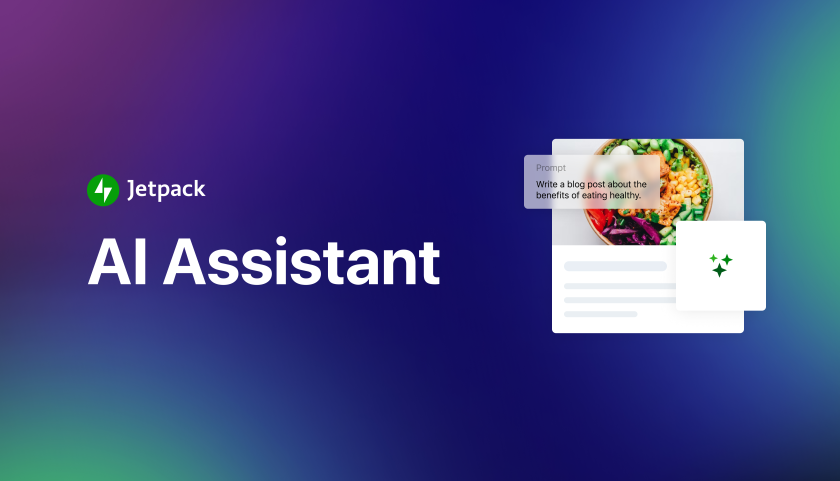
It integrates directly into the WordPress editor so that, as you create new blog posts, build new pages, or work on adding product pages, you can utilize AI to streamline your workflow. Ask it to give you new title ideas or improve the phrasing of a product description. Ask it for meta description suggestions, or even prompt it to create an entire blog post.
Does your post sound overly scientific or way too casual? An AI Assistant can adjust the tone of content to fit your audience. Need to create forms for an event registration? Build a comparison table? Translate content into a new language? It can do all of that.
Jetpack AI Assistant will streamline your processes to help you stay ahead in an ever-evolving business landscape. Embrace the future with AI and unlock new possibilities for your organization.
Frequently asked questions about AI
Will AI replace human beings?
The short answer is: no. At least not any time soon.
If you’re an employer hoping to make huge cuts in staff by implementing AI tools, get ready to be disappointed. You’ll still need someone to manage and support any AI tools you use. You might be able to replace one copywriter or a freelance illustrator by using Generative AI tools, but you may need to bring on a prompt engineer. You also may end up generating more content that would require oversight by additional project managers, art directors, editors, and marketing staff.
For those who are fearful of losing their jobs or clients due to AI, it’s not an unreasonable concern. AI will eliminate some jobs, but it will primarily change the way we work and create new jobs, like prompt engineers, that couldn’t have existed before. If you’re feeling nervous about your future work prospects in the face of AI trends, take some time to consider how you can make AI work for you.
Even though AI is being rapidly incorporated into just about every aspect of business and across every industry, it’s still far from perfect. Sometimes AI tools will perform work better, faster, and more accurately than a person. Other times, AI solutions fail spectacularly.
There are several areas where AI falls short:
- Complex decision-making. While AI excels at certain types of tasks, such as data analysis and pattern recognition, it often struggles with complex decision-making that requires a deep understanding of context, ethics, and human values. Humans are better equipped to handle these intricate decisions.
- Creativity and innovation. AI can generate creative content and ideas to some extent, but it lacks true creativity and the ability to innovate in the same way humans can. Many fields, including art, literature, and scientific discovery, rely on human creativity and intuition.
- Emotional intelligence and human interaction. AI lacks emotional intelligence and empathy. Humans can understand and respond to complex emotions, which is crucial in various roles, including healthcare, counseling, education, therapy, and customer service.
- Ethical and moral decisions. Decisions that involve ethical and moral considerations often require human judgment. AI systems can assist by providing information and analysis, but determining what is right or wrong is a human responsibility.
- Adaptability. Humans are highly adaptable and can perform a wide range of tasks and roles. AI systems are typically designed for specific tasks and may not have the flexibility to handle entirely new or unexpected situations.
- Accountability and responsibility. Holding someone accountable for actions or decisions is a complex human concept. While AI can be programmed to follow rules and guidelines, the assignment of responsibility and accountability often requires human judgment.
Instead of replacing humans, AI is more likely to complement and collaborate with humans in various fields and industries. AI can automate routine tasks, provide insights, and enhance productivity, allowing humans to focus on higher-level tasks that require creativity, critical thinking, and emotional intelligence.
The coexistence of AI and humans will hopefully lead to a more efficient and productive future, with AI serving as a valuable tool for individuals, technology companies, and businesses of all types.
How can businesses get started with AI implementation?
Since AI is becoming increasingly integrated into so many devices and software as new models and technologies are developed, you may already be using it in your business without really being aware.
But if you want to make a more focused effort to take advantage of what new tools in artificial intelligence can do for your business, the best place to start is by looking at what AI can do to help automate aspects of your business that are taking up time, energy, or money that you feel would be better spent on other areas of your business.
If that review process seems too daunting, try starting with your website. Your website is the nexus of your business — it’s how people find you, learn about what you do, and depending on what your industry is, it’s often where you get paid.
Invest in AI software that can make your website more accessible, helps you optimize user experience and load time, and makes publishing content more efficient.
Jetpack AI Assistant can help you quickly generate blog posts and pages, translate them into other languages, and make sure that your spelling and grammar are correct, and your tone is in-line with your brand so that your messaging is always professional.
If you’re not getting the results you want from your prompts or aren’t sure how to write a prompt, check out this helpful guide on OpenAI’s community forum on how to craft prompts for AI.
As for using AI in other parts of your website, you can choose from a variety of other third party tools to manage security and load time optimization, or you could simplify your site management by using Jetpack Complete. With Jetpack Complete, you get tools to protect your website, optimize performance, and create content more quickly, including:
- Jetpack AI Assistant
- VaultPress Backup
- Scan, which includes a web application firewall (WAF)
- Akismet Anti-spam
- Stats
- VideoPress
- Boost with auto CSS generation
- Social advanced with unlimited shares
- Site Search
- The Entrepreneur plan from Jetpack CRM
What is AI-generated content, and how does it benefit businesses and marketers?
AI-generated content refers to textual, visual, or audio content that’s created using artificial intelligence algorithms and tools, often without direct human involvement in the content generation process. AI can generate a wide range of content types, including articles, product descriptions, images, videos, marketing materials, and more.
AI-generated content benefits businesses and marketers in the following ways:
- Efficiency and productivity. AI tools can produce large volumes of content in a relatively short amount of time. This efficiency frees up human resources to focus on more strategic tasks, such as content strategy, analysis, and creative ideation.
- Cost savings. Businesses can reduce production costs by automating content generation with AI. It eliminates the need for hiring additional writers, designers, or video editors, especially for repetitive or routine tasks.
- Consistency. AI can be used to ensure consistency in branding, messaging, and style across all content. It adheres to predefined guidelines and maintains a uniform tone and voice, which is essential for building a strong brand identity.
- Personalization. Content can be tailored to individual user preferences and behavior using artificial intelligence, enabling marketers to deliver highly personalized experiences. Personalized content often leads to higher engagement and conversion rates.
- Content variations. Generate multiple variations of content, allowing marketers to perform A/B testing to determine which versions perform best. This data-driven approach helps refine content strategies.
- Multilingual content. AI can quickly translate and adapt content into multiple languages, expanding a business’s reach to global audiences.
- Content generation at scale. For ecommerce businesses, AI can create product descriptions, comparisons, and recommendations for a vast catalog of products, making it easier to maintain and update product listings.
- Content insights. AI-powered analytics tools can analyze the performance of AI-generated content. They provide insights into what content resonates with the audience, helping marketers refine their strategies.
- Search engine optimization (SEO). AI-generated content can be optimized for search engines, improving a website’s visibility and ranking in search results. AI tools can suggest keywords, optimize meta tags, and create SEO-friendly content.
- Social media marketing. AI-generated content can be used to automate social media posts, respond to customer inquiries, and even create engaging visuals and videos for social media campaigns.
- Content summarization and extraction. AI can summarize lengthy documents, extract key information, and create concise content, making it easier for marketers to digest and share critical insights.
- Content production for niche industries. AI text generators can generate content in specialized or niche industries where subject-matter experts are scarce, ensuring that valuable content is consistently produced.
- 24/7 availability. AI-generated chatbots and virtual assistants can provide round-the-clock customer support, answering queries and providing information at any time.
- Rapid response to trends. AI can monitor real-time data and news to create timely content, ensuring that businesses stay relevant and responsive to current events and trends.
- Content enhancement. AI can suggest improvements to existing content, including grammar and style enhancements, making it more polished and professional.
While AI-generated content offers numerous benefits, it’s important to strike a balance between automation and human creativity. Many businesses use AI to generate content as a starting point, which is then refined and customized by human writers, editors, and designers to ensure quality and relevance.
This hybrid approach combines the efficiency of AI with the creativity and expertise of humans, resulting in high-quality, engaging content.
How can businesses leverage Jetpack’s AI Assistant plugin?
Jetpack AI Assistant is designed to help businesses that use WordPress streamline their workflow and enhance website performance. It can be a valuable addition to your content creation and optimization toolkit, helping you save time, enhance content quality, and improve your website’s SEO and user experience.
Here’s how businesses can leverage Jetpack AI Assistant:
- Automated content generation. Jetpack AI Assistant can generate content for your website, including blog post intros, meta descriptions, and tags. This saves time for content creators and ensures that your website has a consistent flow of fresh content.
- Improved SEO. The plugin can optimize your content for SEO by suggesting relevant keywords, headings, and meta tags. This helps improve your website’s search engine rankings and visibility.
- Customizable content. Customize content to match your brand’s style and voice. This ensures that the generated output aligns with your brand’s messaging and values.
- Enhanced proofreading. Jetpack AI Assist includes grammar and style checking, helping you maintain high-quality content. This can improve the professionalism of your website and user experience.
- Increased productivity. By automating content development and optimization tasks, Jetpack AI Assist allows your team to focus on more strategic aspects of content strategy, marketing, and customer engagement.
- Consistency. AI-generated content is consistent in style and tone, contributing to a cohesive brand identity across your website. This consistency can strengthen your brand’s recognition and reputation.
- Multilingual support. Jetpack AI Assist supports multiple languages, enabling businesses to create content for a global audience. This is particularly useful for companies targeting international markets.
- Integration with WordPress. Jetpack seamlessly integrates with WordPress, one of the most widely used content management systems. This makes it easy for businesses already using WordPress to implement and benefit from AI-driven content development.
To get started with Jetpack AI Assistant, follow these steps:
- Install and activate Jetpack. You can install Jetpack from your WordPress dashboard.
- Go to Plugins → Add New.
- Search for Jetpack. You’ll see “Jetpack – WP Security, Backup, Speed, & Growth” in the results.
- Click Install Now.
- Next, click Activate.
- After activating, click Set up Jetpack.

- Purchase Jetpack AI Assistant. Once you’ve set up Jetpack on your site, you can access additional tools under Jetpack → My Jetpack. Scroll down to Jetpack AI and click Purchase. If your WordPress.com account is associated with multiple websites, you’ll need to select the website that you want Jetpack AI Assistant enabled on before it will be activated on your site.
- Check that Jetpack AI Assistant is enabled. Jetpack AI Assistant should be enabled automatically after you purchase and assign it to your website, but it doesn’t hurt to check in your My Jetpack settings to verify it’s enabled.

- Start writing. That’s it! Now you can start using Jetpack AI Assistant to help you write your content. For a detailed guide on how to use the AI Assistant when creating your pages and posts, read the Jetpack AI Assistant support documentation.

- Monitor content performance. Regularly monitor the performance of your AI-assisted content using analytics tools like Jetpack’s Stats and Google Analytics. Adjust your content strategy based on data insights to improve engagement and conversions.

The most powerful AI tool for WordPress
Turn your ideas into ready-to-publish content at lightspeed.
Elevate your content Jetpack